Data Harnessed for AI-Ready Advancements
Democratise data to unlock value for all
We enable institutions to harmonise data, build trust for sharing across silos, optimise their data workflows with AI-ready tools & playbooks and make these processes repeatable at scale.


Data has become the new oil. Just like oil was the basis for transformation of the 20th century, data is the basis for the 21st century. But it is very important that if data is the new oil, then data is democratised (and) that data is available to everyone.
Nandan Nilekani
Co-Founder and Chairperson,
EkStep Foundation
Nandan Nilekani
Co-Founder and Chairperson,
EkStep Foundation

Public data is built from public resources. Its value however, can only be realised for ‘public good’, when fragmented data silos sitting across sectors and departments give way to a shared framework. That’s the shift from what a nation owns, to what it can use. Unlocked public data has the power to achieve the goals set for India@2047.
Shankar Maruwada
Co-Founder and CEO,
EkStep Foundation
Shankar Maruwada
Co-Founder and CEO,
EkStep Foundation
The Great Unlock

Every day, citizens, businesses and governing institutions make decisions with incomplete information, not because the data doesn't exist, but because it isn't ready to be used. The same is now true of AI; models and applications are only as good as the data they can reach, and India's most valuable data is the hardest to use. Public sector data holds the potential to improve lives, accelerate economic growth, and enable better decisions across every sector. Yet much of it cannot be easily accessed, connected, or trusted enough for a person, or a machine to act on.
India’s public data ecosystem spans

Statistical Datasets

Administrative Datasets

Regulatory Datasets

Geospatial Datasets
Oil had to be refined before it could power anything. Water has to be treated before it can be consumed. Data exists in abundance, collected at great cost by governments, industries, and communities across the world. But in its raw state, it serves only a few.
DATA DHARA
exists to unlock public sector data, wherever it sits underused, and to make it AI-ready.
DATA DHARA enables governments and institutions to transform data into decisions, services and AI systems, whose value reaches everyone.
The Problem
Most public sector data is collected to be stored, not used.
Across a year of experiments spanning government departments, cooperatives and investment agencies, similar patterns emerged.
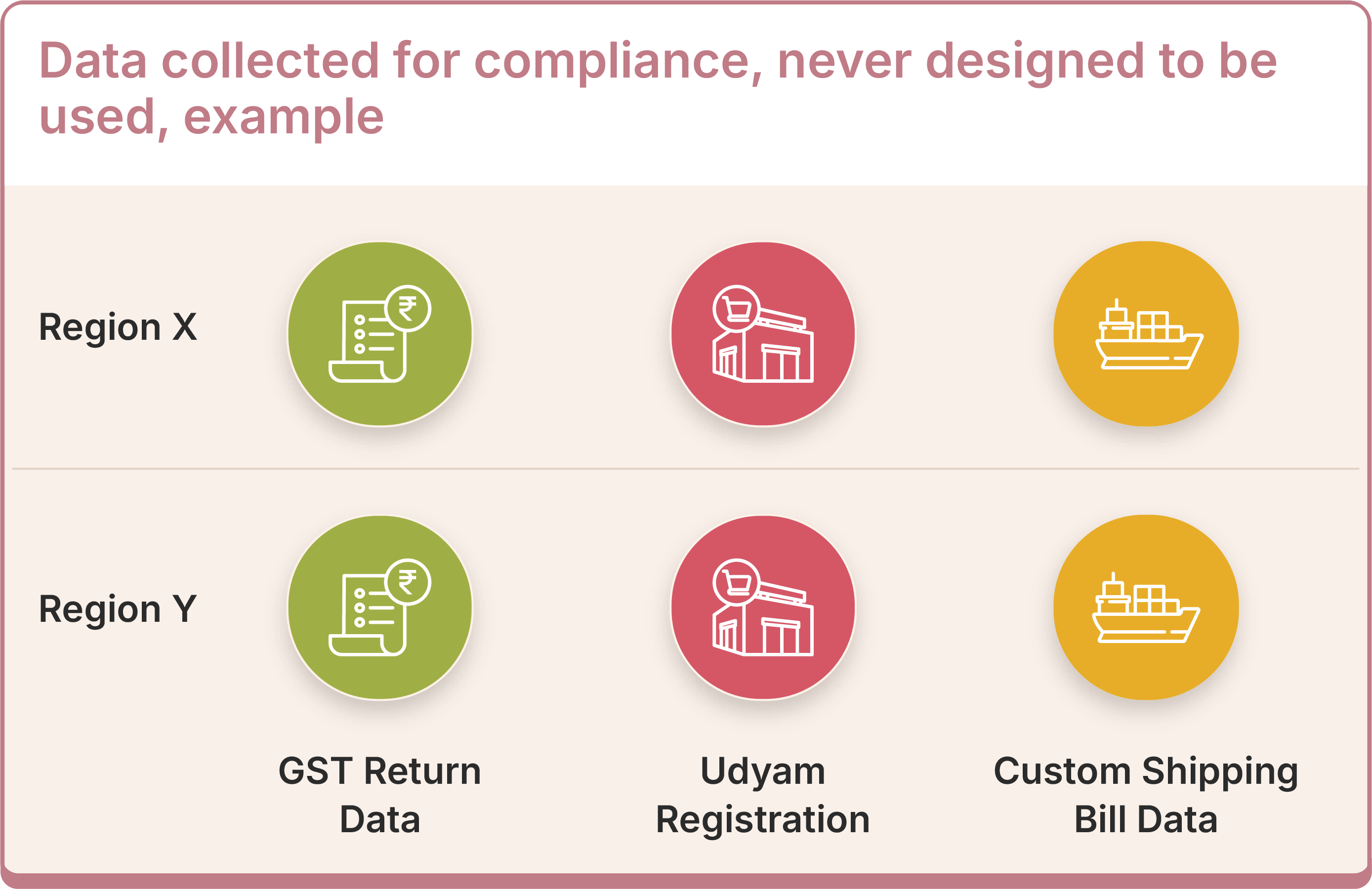
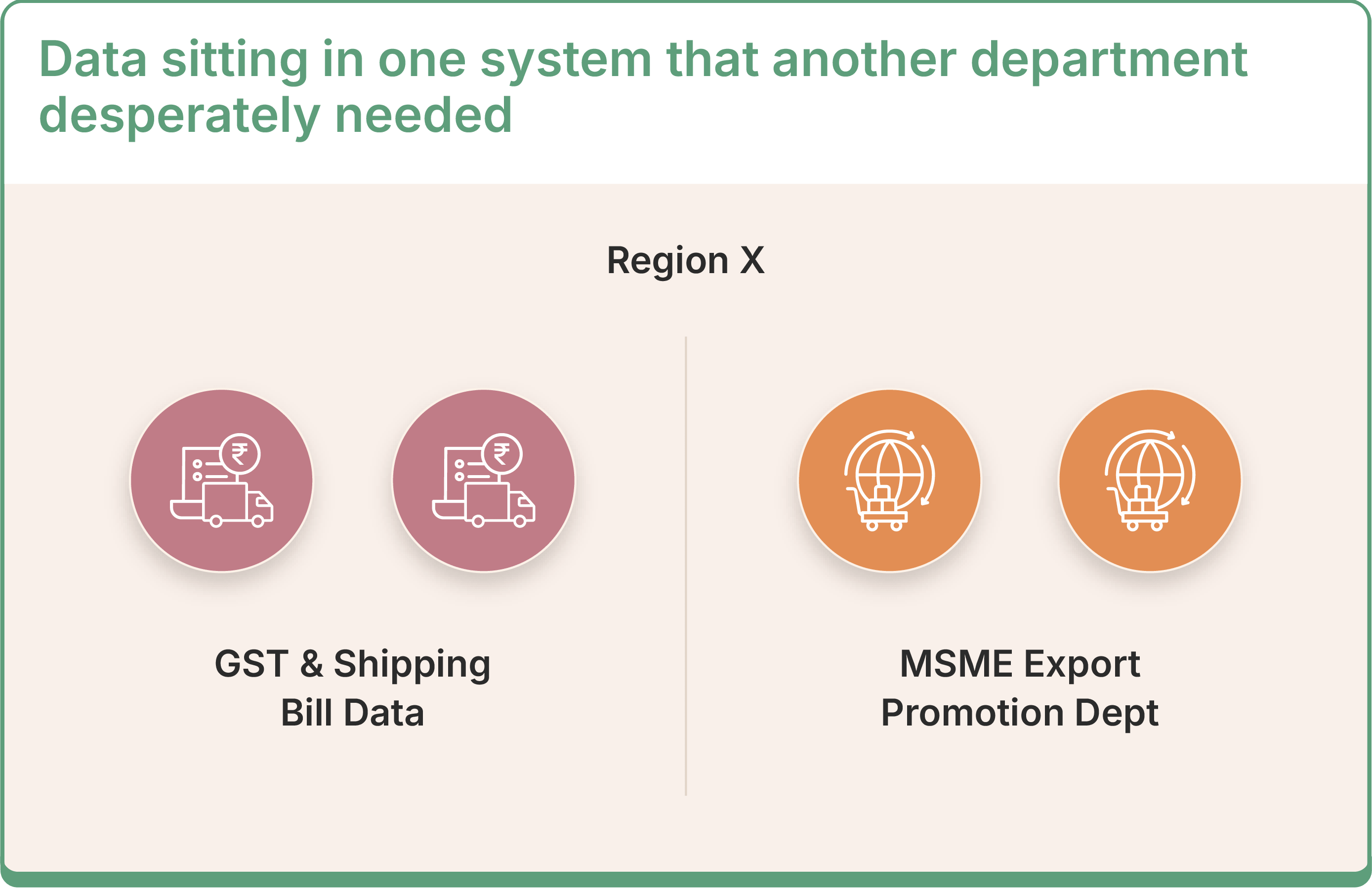
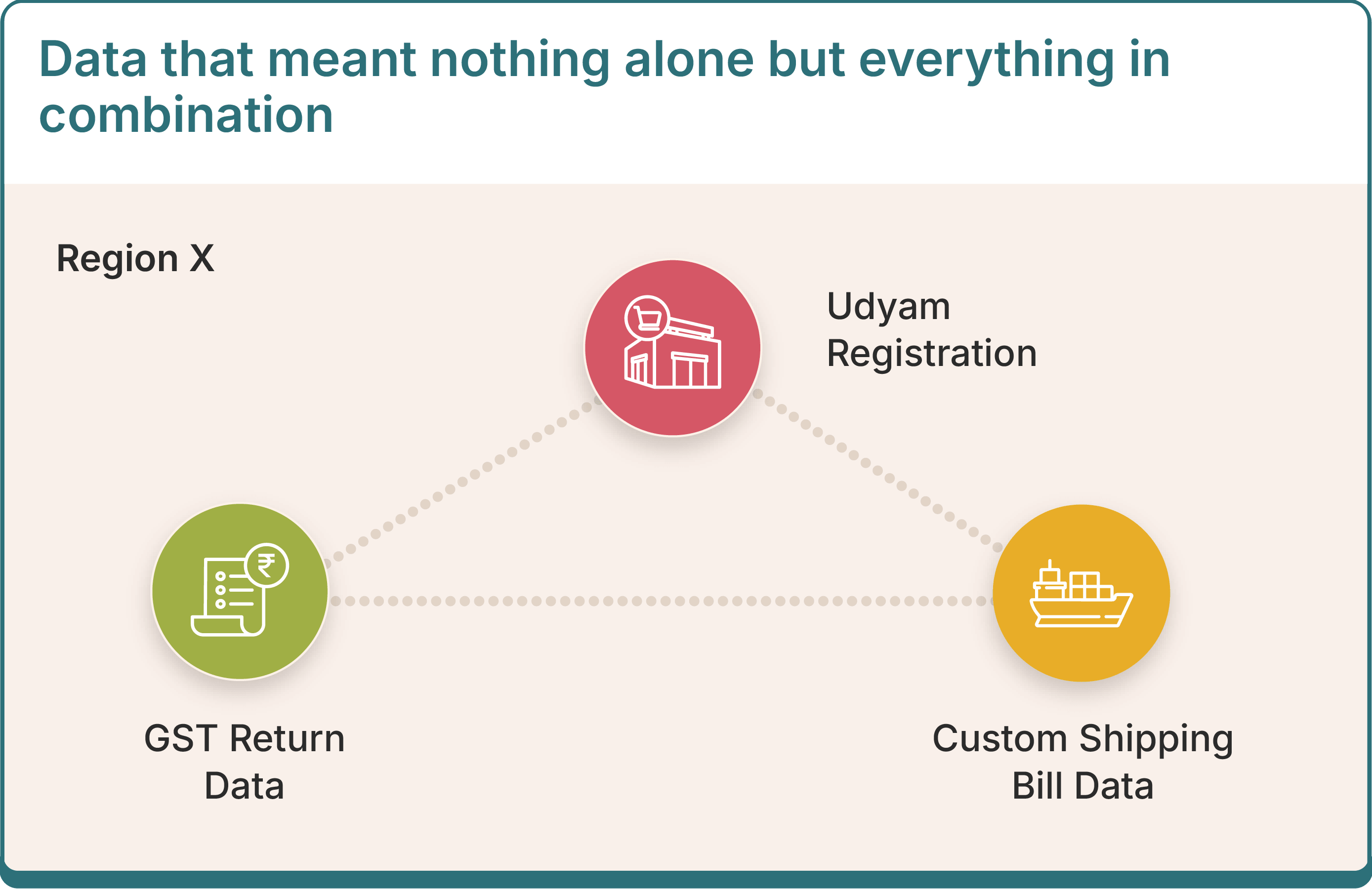
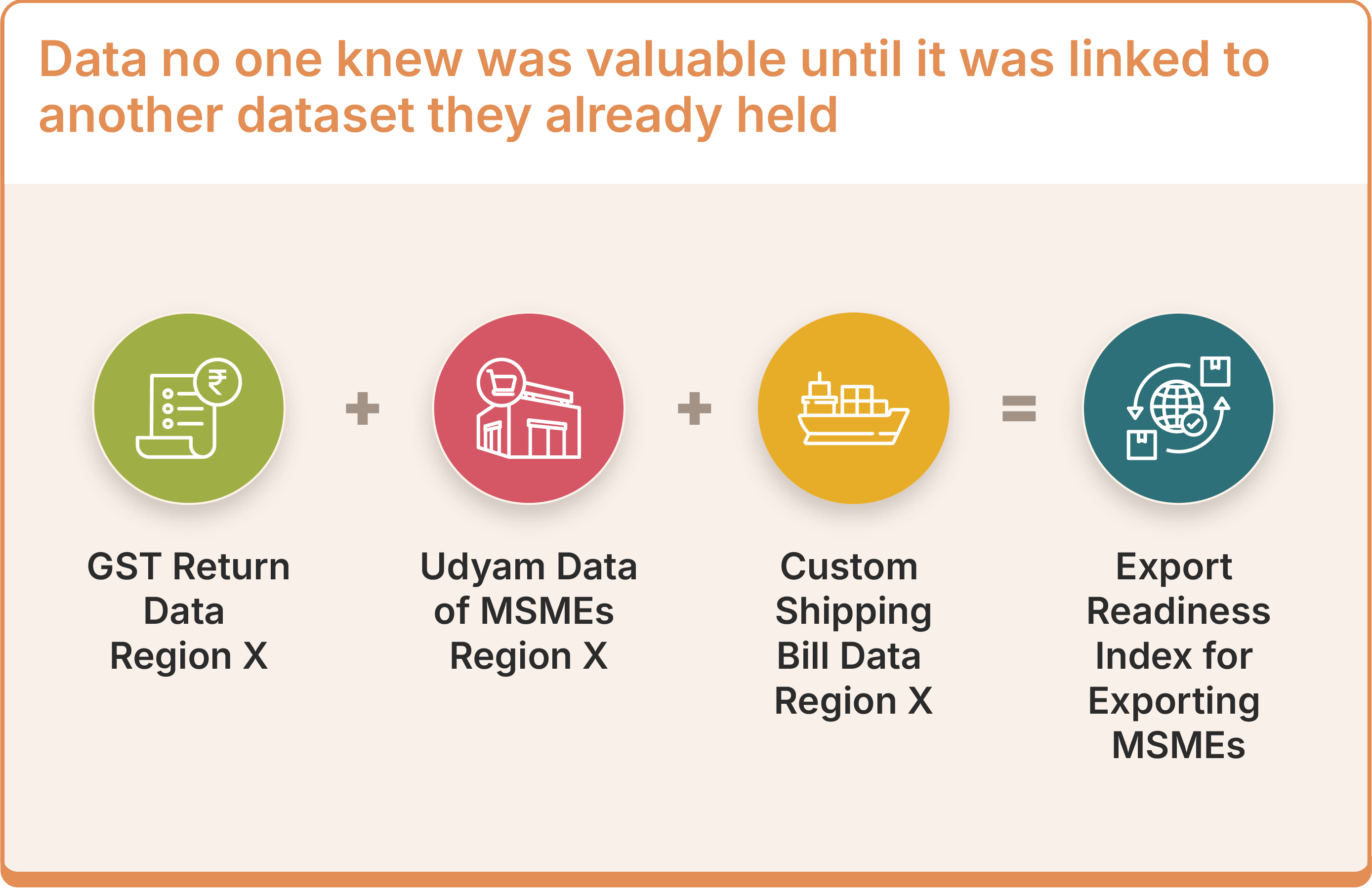
The authoritative data exists.
It's just never been made ready.
These problems have been explained with examples below
THE COST OF
UNUSED DATA
Their operational data is too fragmented to be useful. Every decision built on broken data carries a hidden cost. For example, only 7% of India's 65 million MSMEs are exploring data-driven tools.
THE
COORDINATION GAP
India has generated extraordinary public data across labour, health, agriculture and industry. But the departments that hold it don't share it. Accountability is unclear, mandates don't exist, and the data stays siloed.
THE
READINESS GAP
Data that no AI can use, scanned, unlabelled, undocumented, inconsistent, technically available, but not in a state any model or agent can work with.
THE
INTEROPERABILITY GAP
A student's training record lives in one system. An employer's job posting in another. Farmer data, credit data, weather data — each sealed off from the rest. The value of data multiplies when it can be joined across sources.
THE
INSTITUTIONAL GAP
Departments worry about being held accountable for data they don't fully understand. Ministries are reluctant to share what they see as theirs. Ownership, risk and accountability have no clear answers.
THE
SOVEREIGNTY QUESTION
Systems built on Indian problems need to run on Indian data, with Indian context, languages and ground truth. A prerequisite for systems that actually work here.
AI diffusion runs on data.
Value sits in sectors. Horizontals make it reach everyone. Data is the horizontal AI cannot do without.